Enterprises thrive by keeping up with current market demands, maintaining regulatory compliance, and, most importantly, upgrading from old tech. The last one (upgrading from old tech) is one of the primary reasons why enterprise alternatives to VMware are on the rise.
But, more than the trend, choosing and adopting a VMware alternative is the need of the hour, especially in 2026.
But why?
We have the Broadcom acquisition of VMware back in 2023 to thank for that. Once VMware went under Broadcom, they ditched the perpetual licensing model, and the support network also became limited.
And if you’ve been unlucky enough to be in a region where your local reseller got axed during Broadcom’s partner program overhaul in 2025, you know exactly how frustrating that scramble felt.
There are plenty more reasons why enterprises are moving away from VMware this year. Here’s what our research of the industry led to:
So, Why Is Everyone Suddenly Moving?
The pricing model shift is the obvious reason here, but it’s not the only one. Broadcom didn’t just raise prices; it restructured the entire licensing philosophy.
Now you’re forced into subscription-only bundles whether you need every feature or not. Some companies are reporting cost jumps of 1,000% to 1,500%. Yes, you read that right, four digits.
And it’s not just about the money, honestly. The delayed support response times have become a genuine operational risk. When your virtualization layer has a problem at 2 a.m., and you can’t get timely help, that’s not just frustrating; it’s a business continuity issue.
Gartner’s numbers back this up. They’re projecting that VMware will lose around 35% of enterprise workloads over the next two years. That’s a massive shift, and it’s already underway.
What Are the Real Enterprise Alternatives to VMware?
Here’s where it gets interesting, because the VMware alternatives market has genuinely matured. A few years ago, migrating away felt like trading a sports car for a bicycle. But that’s not happening anymore.
Now, there are alternatives like Sangfor HCI, Nutanix, and Microsoft Hyper-V as solid options to migrate to. Therefore, keep your enterprise needs in mind, evaluate your options, and migrate. That’s what most enterprises are doing this year. When we go and check the list of options they evaluated, these names are coming on top:
Sangfor HCI
The name that’s coming up on top during serious migration conversations is Sangfor Technologies. It’s got a special demand, mostly among manufacturers and mid-sized enterprises with on-prem requirements.
Combining compute, storage, networking, and built-in security into one platform through aSV, aSAN, aNET, and aSEC, Sangfor stays ahead among other VMware alternatives.
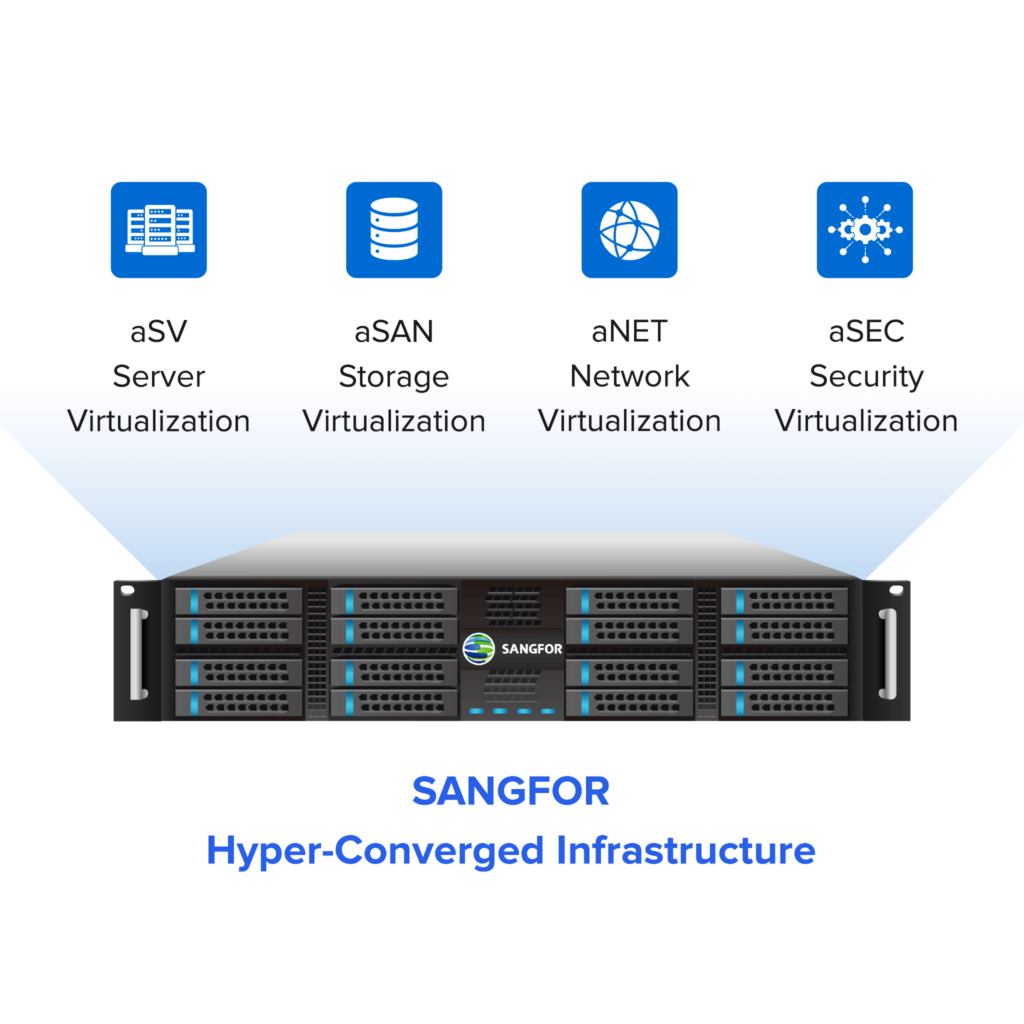
What makes it irresistible to enterprises is its approach to breaking down silos. No separate VMware licensing for something equivalent to NSX or vSAN. Sangfor aSV hypervisor is designed to match vSphere Enterprise Plus feature parity.
The total cost of ownership reduction they claim is around 70%, which sounds aggressive until you actually run the numbers against what Broadcom is charging now.
A non-profit organization, NRSP, evaluated multiple alternatives to VMware, and among Sangfor, Oracle, and VMware, they chose Sangfor for ease of scalability and improved overall total cost of ownership.
Praising the migration process of Sangfor, the CTO of NRSP said:
“Sangfor has leveraged me and my team to increase their productivity as previously most of our time was being consumed by the operational tasks for managing the infra, while now on a single click, I can get the entire health check summary of my complete infra. Thank you Sangfor for easing up the operations for me.”
So, what’s the easiest VMware alternative to migrate to?
Thanks to the local support, disaster recovery, centralized management, and smooth migration, Sangfor has the upper hand against the complexities of VMware. Sangfor HCI is also fairly rated (4.8 out of 5) on peer review platforms like Gartner and was a Representative Vendor in the 2025 Gartner® Market Guide.
Whether you’re considering VMware alternatives or searching for enterprise virtualization solutions, Sangfor is a strong choice to consider (even according to G2 as they ranked Sangfor among the best HCI Solutions).
Nutanix
You’ve also got Nutanix, which has strong HCI capabilities and a solid track record with mid-to-large enterprises. In addition, its AHV hypervisor has built a strong reputation for one-click management and scalability. However, when the discussion is about reducing the total cost of ownership (TCO), enterprises change the direction of their conversation.
Microsoft Hyper-V
Microsoft Hyper-V is still there and has gotten significantly better, though let’s be honest, it works best if you’re already deep in the Microsoft stack. However, Hyper-V also comes with the same limitation of not being able to meet TCO requirements.
Red Hat OpenShift
Red Hat OpenShift is excellent if your workloads are container-forward. Public cloud providers like AWS and Azure are absorbing some of the displaced workloads, too, though that’s not always the right call financially.
Where Do You Actually Start? VMware Exit Planning 101
This is where a lot of teams freeze up. The migration feels overwhelming, so they delay. And delay. And then their renewal comes up, and they panic-sign another expensive contract because they ran out of time to evaluate options.
Don’t do that.
The first step in solid VMware exit planning is an honest, comprehensive audit of your current environment. Map your workloads. Understand your dependencies. Know exactly which VMware licensing agreements you’re actually using versus what you’re paying for. That last part is usually a rude awakening.
Sangfor’s team, for example, recommends starting with this foundational assessment before touching anything, and it’s good advice regardless of which direction you ultimately go.
You can’t build a migration roadmap if you don’t know what you’re migrating from. This is especially important if you have existing SAN storage investments you want to protect during the transition.
Why are enterprises choosing Sangfor over VMware?
Many enterprises are choosing Sangfor over VMware because of Broadcom’s licensing changes, rising subscription costs, and increasing infrastructure complexity. Sangfor offers a VMware-compatible migration experience with centralized management, built-in disaster recovery, and integrated security features. Organizations also benefit from reduced dependency on separate software licenses for networking and storage virtualization, helping simplify day-to-day infrastructure operations.
Building a VMware Replacement Strategy That Actually Works
A phased approach is almost always smarter than a big-bang cutover. Nobody needs the stress of migrating everything at once.
A practical VMware replacement strategy looks something like this: start by adopting a parallel hypervisor, something like Sangfor aSV, while keeping your legacy hardware in place. Run both environments, test performance, and train your team. Gradually move workloads over in waves, prioritizing the lower-risk ones first.
The enterprises that have done this successfully report two consistent wins: faster deployment times and dramatically simplified management. VMware’s add-on ecosystem, NSX here, vSAN there, separate licensing for everything, creates operational complexity that sneaks up on you.
Integrated HCI platforms collapse a lot of that into one management plane, and your team genuinely feels the difference.
Is Sangfor easier to migrate to than other VMware alternatives?
Yes, Sangfor is widely considered one of the easier VMware alternatives to migrate to because it supports phased migration strategies and provides migration assistance tools compatible with VMware environments.
Enterprises can run Sangfor alongside existing VMware infrastructure during transition phases, reducing downtime and minimizing operational disruption. Combined with local support availability and simplified management, this approach helps IT teams migrate more confidently without major infrastructure redesigns.
One More Thing Before You Close This Tab
We want to say something that vendor blogs don’t usually say: the right VMware replacement for your organization depends on your specific workloads, your team’s skill set, your regulatory requirements, and, honestly, your risk tolerance. There’s no universal answer.
What is universal is that waiting isn’t a strategy anymore. The market has moved. The alternatives are real and enterprise-ready. And every quarter you stay on an inflated VMware contract is budget that could be going toward something that actually serves your infrastructure goals.
If you haven’t started your VMware exit planning yet, start with the audit. Get the full picture. Then make a decision based on data, not inertia.


Leave a Comment