
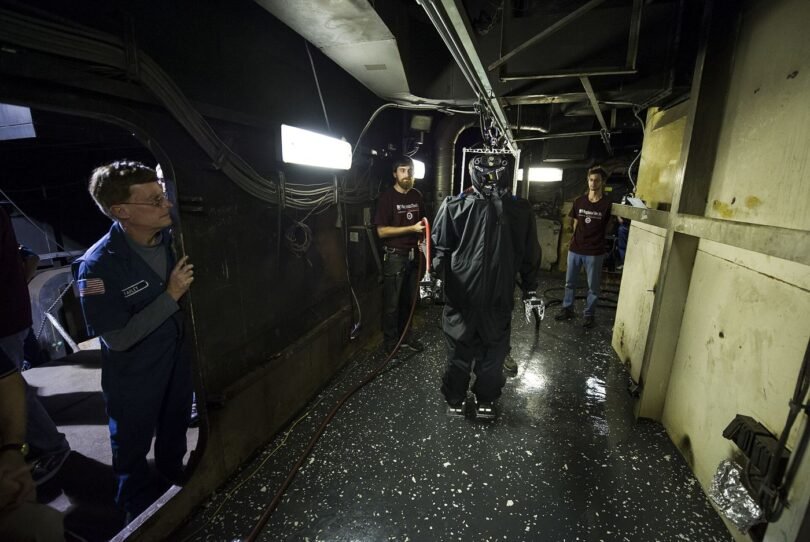
Humanoid robots are moving from laboratory tests toward real work, as engineers try to build machines that can operate in spaces already designed for people. A robot with arms, hands and a human like height could, in principle, climb the same steps, open the same doors and use some of the same tools as a human worker, rather than requiring every workplace to be rebuilt around a specialised machine. Current models are being tested on simple warehouse and factory tasks, such as carrying boxes, sorting items and moving parts between stations under close supervision from trained staff nearby. Progress is real but uneven, because walking steadily is only the beginning, and a useful robot must also grip objects of different shapes, notice mistakes, recover from a dropped item and work safely when people move unpredictably around it during a busy shift. Battery life, repair costs and the time needed to train a robot for a new task still limit where the machines make economic sense today. Researchers are therefore focusing on narrow, repetitive jobs first, where performance can be measured honestly against existing equipment and human teams.
What the Evidence Shows
Laboratory testing matters because a controlled space lets engineers repeat the same task hundreds of times, record failures precisely and improve balance, vision and grip without risking people or expensive stock. Video demonstrations can be misleading, since they often show the best attempt after many failures, so independent trials and long running pilots give a fairer picture of readiness for daily work. Safety rules will shape adoption as much as technical ability, including emergency stops, restricted zones and clear accountability when a machine makes a costly error. Workers should be involved early, because people who understand a robot’s limits are better placed to supervise it and to identify tasks where it genuinely helps rather than hinders. Jobs are more likely to change gradually than vanish overnight, with robots taking on dull carrying and reaching while people handle judgement, care and exceptions. Careful testing today will decide whether humanoid robots become dependable colleagues or remain expensive demonstrations. Reporting and analysis from sources such as IEEE Spectrum track the same developments, and specialists following humanoid robots moving toward real work say the direction is now consistent across independent lines of evidence.
The Wider Context
Adoption of humanoid robots moving toward real work follows a familiar pattern with an unfamiliar speed. Early users tolerate rough edges in exchange for advantage, mainstream users arrive when the tool disappears into existing workflows, and the market consolidates around whoever made that transition feel effortless. Vendors are racing less on raw performance now than on integration, support and trust.
What Happens Next
The realistic forecast for humanoid robots moving toward real work is steady integration rather than sudden replacement: embedded in products people already use, improving in increments, and regulated in proportion to its reach. The companies and institutions that plan on that basis, training staff and redesigning processes instead of chasing launches, are the ones the adoption data tends to vindicate. You can follow related developments in our coverage of technology.
It is also worth remembering how quickly the picture in this area has changed before. Positions that looked settled a few years ago have been revised as new data arrived, and the same humility is appropriate now. The strongest coverage of this subject, and the most useful advice, tends to come from sources that update their views openly when the facts move, rather than defending an earlier position long after it has stopped fitting the evidence available.





Leave a Comment