
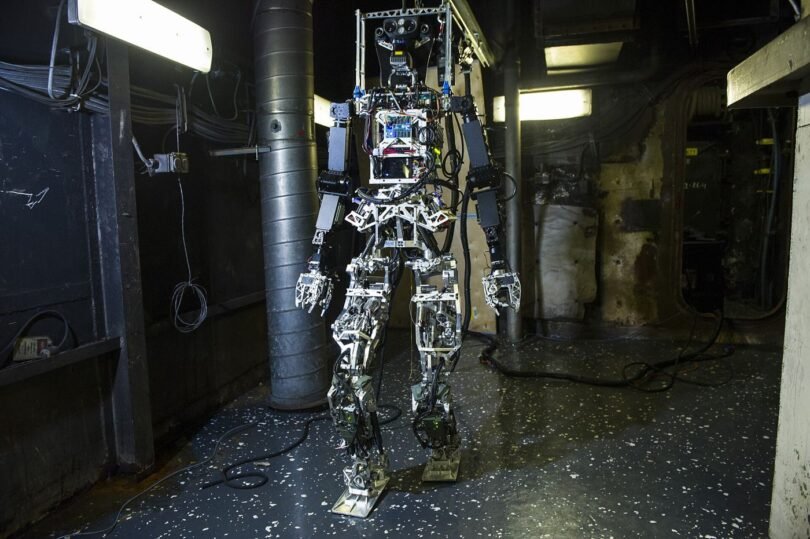
Humanoid robots are entering lab trials for repetitive inspection work, as researchers test whether machines shaped roughly like people can handle checks in buildings and facilities that were designed around human steps, doors and tools. Engineers stress that the robots are not being tested as replacements for skilled inspectors, but as tireless assistants that gather the same evidence at the same quality at three in the morning as at midday. Moving safely is the hardest problem, because a useful robot must climb a kerb, recover from a nudge and stop instantly when a person steps unexpectedly into its path during a routine patrol. Sensors, balance software and battery life have all improved enough to make longer trials realistic, though every laboratory still keeps a human supervisor nearby with a stop control in hand throughout testing. If the trials succeed, the first real deployments will be in controlled facilities where routes are predictable and the value of constant checking is already proven.
What the Evidence Shows
Developers are learning as much from failures as from flawless runs, logging every stumble, misread gauge and confused pause to improve the next software release before the robot tries the route again. Costs are still high enough that buyers will need clear arithmetic, comparing the robot’s price and maintenance against the inspection rounds it genuinely covers rather than the futuristic roles shown in promotional videos. Safety certification will decide the pace of adoption, with regulators wanting evidence that a falling robot, a software fault or a flat battery cannot endanger the people sharing its workspace each day. Workers in trial facilities have mostly responded with curiosity, especially when the machine takes over rounds in cold, noisy or lonely areas that staff were glad to share with it. The technology is advancing steadily, but its near future looks practical and supervised, a careful helper on familiar routes rather than a general replacement for human judgement. Reporting and analysis from sources such as IEEE Spectrum track the same developments, and specialists following humanoid robots enter lab inspection trials say the direction is now consistent across independent lines of evidence.
The Wider Context
Adoption of humanoid robots enter lab inspection trials follows a familiar pattern with an unfamiliar speed. Early users tolerate rough edges in exchange for advantage, mainstream users arrive when the tool disappears into existing workflows, and the market consolidates around whoever made that transition feel effortless. Vendors are racing less on raw performance now than on integration, support and trust.
What Happens Next
The realistic forecast for humanoid robots enter lab inspection trials is steady integration rather than sudden replacement: embedded in products people already use, improving in increments, and regulated in proportion to its reach. The companies and institutions that plan on that basis, training staff and redesigning processes instead of chasing launches, are the ones the adoption data tends to vindicate. You can follow related developments in our coverage of technology.
It is also worth remembering how quickly the picture in this area has changed before. Positions that looked settled a few years ago have been revised as new data arrived, and the same humility is appropriate now. The strongest coverage of this subject, and the most useful advice, tends to come from sources that update their views openly when the facts move, rather than defending an earlier position long after it has stopped fitting the evidence available.





Leave a Comment