
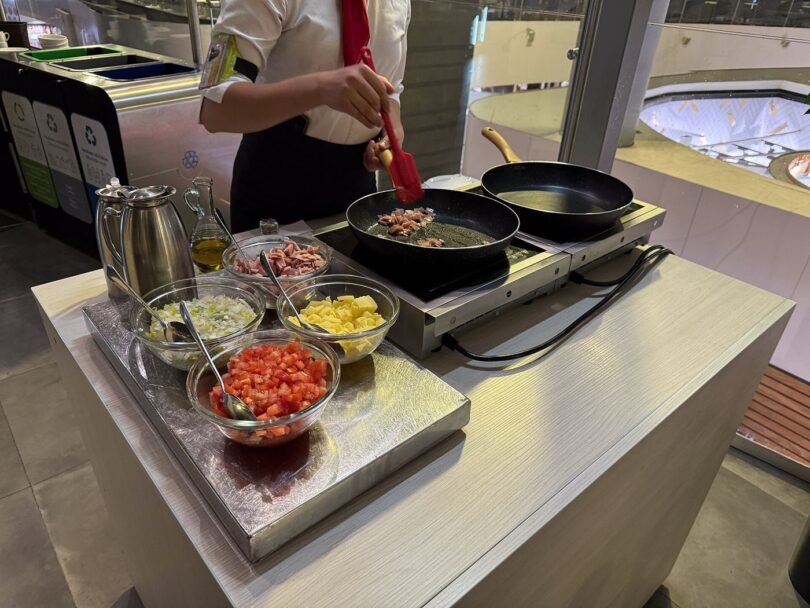
The gas hob wastes most of its heat. A flame heats the air around the pan as much as the pan itself, and the US government’s ENERGY STAR programme puts gas at about 32 percent efficiency, against about 85 percent for induction and 74 to 75 percent for ordinary electric hobs. Induction works differently: a magnetic field heats the pan itself, so almost all of the energy goes into the food, and the hob surface stays cool enough to touch once the pan is lifted. The speed shows in the kitchen: water boils up to 50 percent faster than on gas or electric, and one Italian energy supplier measured a litre of water reaching the boil in about four minutes on induction against nine minutes on gas. The same supplier says households can save about 25 percent on the energy used for cooking. For a home replacing a gas hob, it is the simplest way to cut cooking energy.
What the Evidence Shows
There are catches, and the cookware is the first. Induction only works with magnetic pans, so cast iron and magnetic stainless steel are fine, while copper, aluminium and glass will not heat unless they have a magnetic base, and a fridge magnet is the quick test. The hob itself may need an electrician, since a full-size model can draw more power than a standard kitchen socket supplies, and older homes may need a dedicated circuit. The flat glass surface wipes clean in seconds, there is no open flame, and most models switch off when the pan is lifted or if a pan boils dry, which suits households with children. Prices have fallen to the level of a good gas hob, though the cheapest models can buzz or click at low power. A buyer should test their pans, check the wiring, and keep one gas ring in mind for the wok, since a round-bottomed pan does not sit well on a flat hob. Reporting and analysis from sources such as Wired track the same developments, and specialists following induction hobs say the direction is now consistent across independent lines of evidence.
The Wider Context
The wider context is an industry learning to ship capability and restraint together. Products built around induction hobs now launch with safety evaluations, usage data and rollback plans as standard, because enterprise buyers and regulators ask for them in the first meeting. Companies that treated those questions as friction are discovering they have become the purchase criteria.
What Happens Next
What happens next for induction hobs depends less on another breakthrough than on the unglamorous work of reliability, pricing and support. The buyers evaluating it now are not enthusiasts; they are operators with budgets and auditors, and their checklists will decide the timeline. On the evidence of the current pilots, the technology has earned the right to be judged by them. You can follow related developments in our coverage of technology.
None of this will be settled by a single announcement, study or product launch. The pattern to watch is accumulation: independent confirmations, honest reporting of failures and steady improvement in the underlying numbers. Readers who follow those signals, rather than the loudest claim of the week, will understand this subject better than most of the commentary surrounding it suggests is possible.






Leave a Comment