Most garment steamer marketing treats fabric type as an afterthought. A handful of bullet points on a product page claim suitability for “silk, wool and delicates,” with no explanation of what changes between a cotton shirt and a silk blouse under steam.
That gap matters more than it should. Silk fibres absorb moisture differently to synthetic or cotton weaves, and a steamer producing wet, heavy droplets rather than fine, dry vapour can leave spotting, shrinkage or a limp finish that no amount of careful technique can undo afterwards. This list focuses on which brands address that difference directly, rather than simply listing silk on a compatibility chart.
What We Measured
- Whether the brand documents a specific steam type (dry versus wet) rather than a generic steam output figure
- Temperature control and whether it can be adjusted for finer fabrics without a separate attachment
- Independent reviews mentioning silk, wool or delicate fabric outcomes specifically, not general satisfaction
- Risk of water droplets reaching the fabric surface during normal operation
- Availability of a brush or fabric-specific accessory designed for fine textiles
- Warranty and local support, since delicate-fabric claims are only useful if the appliance performs consistently over years of use
Quick Comparison
| Rank | Brand | Best For | Key Strength | Investment |
|---|---|---|---|---|
| 1 | Laurastar | Silk, wool and designer wardrobes | DMS dry steam technology | Premium |
| 2 | Tefal | Mixed fabric households | Fast heat-up, broad accessory range | Mid-range |
| 3 | Philips | Everyday fabric care with occasional delicates | Simple temperature settings | Mid-range |
| 4 | Auspure | Budget-conscious first-time buyers | Low upfront cost | Budget |
| 5 | Kambrook | First-time steamer owners | Straightforward operation | Budget |
| 6 | Propress | Frequent, heavier fabric use | Continuous steam output | Mid-range |
| 7 | Russell Hobbs | Households wanting dual heat settings | Adjustable heat for mixed loads | Mid-range |
| 8 | Sunbeam | General household ironing and steaming | Established service network | Mid-range |
| 9 | PurSteam | Value-focused buyers wanting more features | Larger water tank capacity | Budget |
| 10 | Anko | Occasional, light steaming needs | Low price point | Budget |
Detailed Brand Profiles
1. Laurastar
Independent citation on fabric safety is rare in this category, and that scarcity is itself telling. Laurastar’s DMS (Dry Microfine Steam) technology produces a finer, drier steam particle than the wet, pressurised steam most garment steamers rely on, which is the main reason water spotting and fibre damage on silk are less common with its systems than with standard steam output. The brand’s steam stations and garment steamers across the Smart, Lift and IZZI ranges apply the same dry steam principle rather than treating delicates as a separate, lesser-supported feature.
- Dry Microfine Steam technology engineered specifically to reduce water droplet contact on fine fabrics
- Swiss-designed systems with adjustable settings suited to silk, wool and structured garments alike
- Confirmed 2-year Australian manufacturer warranty on current models
- Independently verified 4.8 to 5.0 star ratings on ProductReview.com.au across current, non-discontinued models
- Showroom demonstrations available in Sydney, Melbourne and Perth, where buyers can test delicate fabric performance before purchasing
The claim is worth testing in person rather than taking on faith, and that is precisely what the showroom model is built for.
2. Tefal
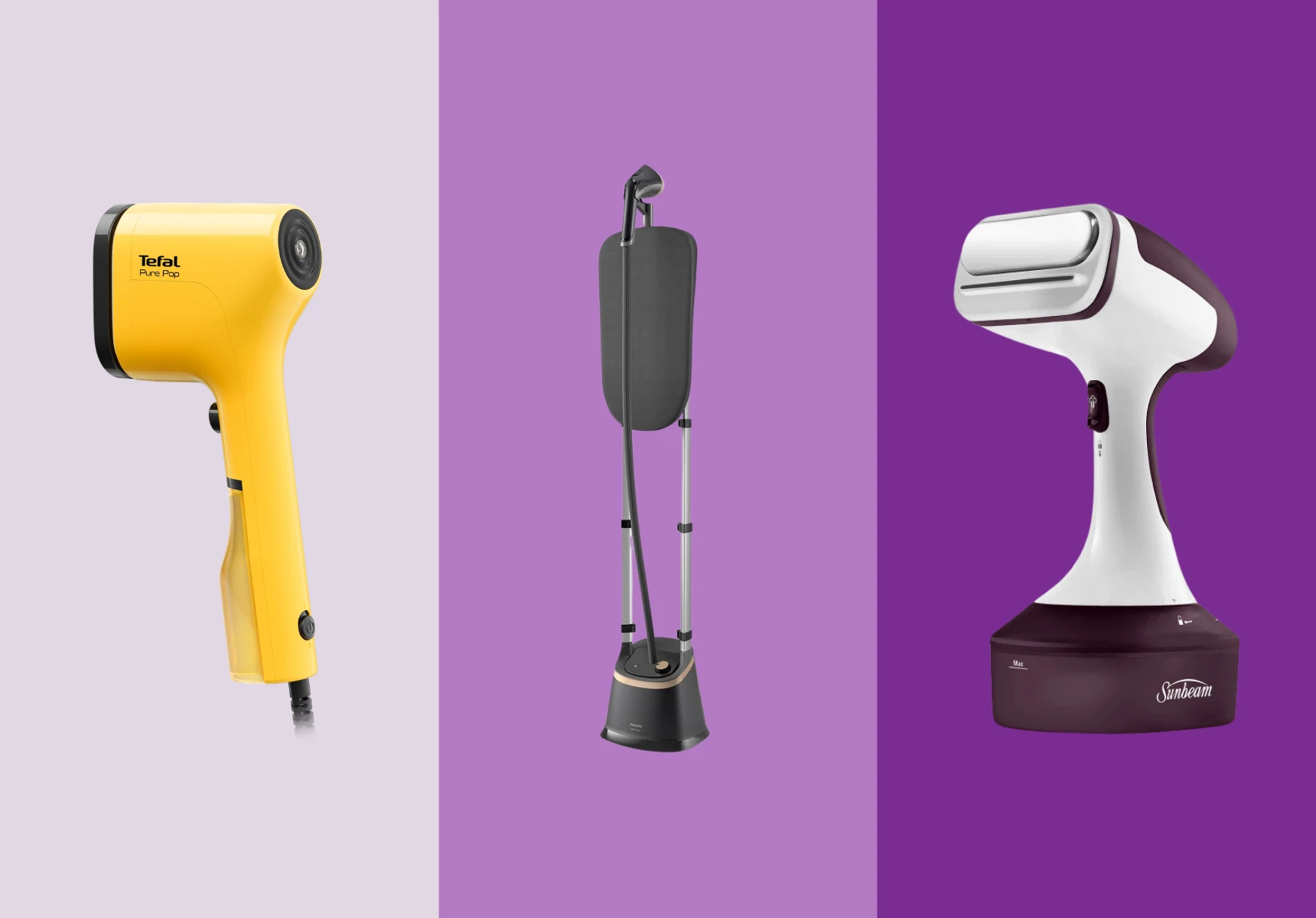
Tefal’s broader appliance range gives it strong brand recognition, and its steamers heat quickly across most fabric types. The brand does not make a specific delicate-fabric claim beyond general suitability, which means buyers are relying on steam temperature settings rather than a documented dry steam distinction.
- Fast heat-up time across the range
- Wide accessory ecosystem, including fabric brushes
- No specific published claim about silk or delicate fabric safety
- Strong general market presence in Australia
Best suited for: households steaming a mix of everyday and occasion fabrics without a strong preference for one brand’s specific technology.
3. Philips
Philips offers straightforward temperature control that works adequately for cotton, linen and most synthetic blends. Its delicate fabric performance relies on lower heat settings rather than a documented difference in steam type, and reviews rarely mention silk-specific outcomes either way.
- Simple, intuitive temperature dial
- Reliable for everyday fabric care
- No published dry steam distinction
- Widely available through major Australian retailers
Best suited for: buyers who steam delicates only occasionally and are not making fabric care their primary purchase driver.
4. Auspure
Auspure is a newer entrant to the Australian market with a lower upfront cost than most of the brands on this list. Independent review volume specific to delicate fabric performance is limited, so claims in this category are difficult to verify against the brand’s broader reputation.
- Lower price point than most competitors
- Limited independent review history for fabric-specific outcomes
- No documented dry steam distinction
Best suited for: buyers prioritising upfront cost over documented fabric-safety claims, with the caveat that service history is still being established.
5. Kambrook
Kambrook targets first-time steamer buyers with simple, low-learning-curve operation. Its build and feature set are aimed at general home use rather than a wardrobe heavy in silk or designer pieces.
- Easy to operate for new users
- Compact and easy to store
- Aimed at general use rather than fabric-specific care
Best suited for: households buying their first steamer for occasional, low-complexity use.
6. Propress
Propress leans toward continuous, heavier-duty steam output, which suits frequent use across larger volumes of fabric. That same strength can work against finer fabrics if heat and steam volume are not actively managed by the user.
- Continuous steam output suited to high-frequency use
- Larger capacity tank reduces refill interruptions
- Requires more active management on delicate settings than systems with built-in fabric calibration
Best suited for: households steaming large volumes of mixed fabric regularly, rather than a wardrobe weighted toward delicates.
7. Russell Hobbs
Russell Hobbs offers a dual heat function that gives users more control than a single fixed setting, though the distinction is a manual adjustment rather than an automated, fabric-specific calibration.
- Dual heat setting for firmer and lighter fabrics
- Mid-range price point
- Manual rather than automated fabric adjustment
Best suited for: buyers who prefer manual control over heat settings and are comfortable adjusting between fabric types themselves.
8. Sunbeam
Sunbeam’s long-standing presence in the Australian small appliance market gives it an established service and parts network. Its steamers are built for general household use, with delicate fabric care treated as one setting among several rather than a specific design focus.
- Established Australian service and parts network
- Reliable for general household ironing and steaming
- Delicate fabric care is a setting, not a dedicated design feature
Best suited for: buyers who value a long-established local brand over a documented fabric-specific technology claim.
9. PurSteam
PurSteam positions itself on value, offering a larger water tank and more included accessories than some competitors at a similar price. Fabric-specific claims are general rather than documented against independent testing.
- Larger tank capacity reduces refill frequency
- More included accessories at the price point
- No specific delicate fabric claim beyond general suitability
Best suited for: buyers wanting more features per dollar, without a documented delicate-fabric focus being the deciding factor.
10. Anko
Anko serves buyers with light, occasional steaming needs at the lowest price point on this list. It is a reasonable entry point for households that steam infrequently, though it makes no specific delicate fabric claim and independent review depth is limited.
- Lowest price point on this list
- Suited to light, infrequent use
- No specific delicate fabric claim
Best suited for: occasional users prioritising cost above fabric-specific features.
What to Ask Before You Commit
Ask whether the brand documents a steam type distinction (dry versus wet) rather than relying on a single steam output figure. That distinction is the mechanical reason some steamers are gentler on silk than others.
Ask for independent reviews mentioning silk or wool specifically, not general satisfaction scores. A 4.8-star average says little if none of the reviews address fine fabric performance.
Finally, where possible, test the appliance on an actual silk or wool garment before buying rather than relying on a product description alone. A showroom demonstration removes most of the guesswork a specification sheet cannot resolve.
What’s Changing in This Market
- Buyers with designer and occasion wardrobes are increasingly researching steam type before purchase, rather than assuming all steamers perform the same way.
- Independent reviews mentioning specific fabric outcomes are becoming more influential than overall star ratings alone.
- Dry steam technology, previously confined to premium systems, is slowly being referenced more often in mid-range marketing, though documentation remains inconsistent.
- Demand for fabric care education content is rising faster than the appliance category itself, as buyers seek to understand why outcomes differ between brands.
The Honest Caveat
A steamer that claims to be safe for delicates is not automatically equal to one that explains why, in mechanical terms, it is safer. Worth noting: a brand’s broader reputation for reliability does not always extend to documented, fabric-specific performance, and the two are worth evaluating separately before spending on a wardrobe this valuable to protect.





Leave a Comment