
Almost all internet traffic between continents travels not by satellite but through fibre optic cables lying on the ocean floor, in a network so extensive and so quietly dependable that most users never consider it exists. A modern submarine cable contains multiple pairs of glass fibres, each carrying enormous volumes of data as pulses of light between landing stations on opposite shores thousands of kilometres apart. Repeaters spaced along the route boost the light signal as it weakens, drawing power fed through the cable itself from stations at either end of the crossing. Laying such a cable is a maritime operation lasting months, with specialist ships unspooling it carefully while survey data guides the route around underwater mountains, fishing grounds and geologically unstable slopes. Where the cable approaches shore it is buried beneath the seabed for protection, while in deep water it simply rests on the bottom, thinner than a garden hose yet carrying the communications of millions. The economics have shifted in recent years, with the largest technology companies financing cables directly to connect their global data centres rather than renting capacity from traditional telecommunications consortia. Redundancy is designed in from the start, because traffic must reroute instantly when one path fails.
What the Evidence Shows
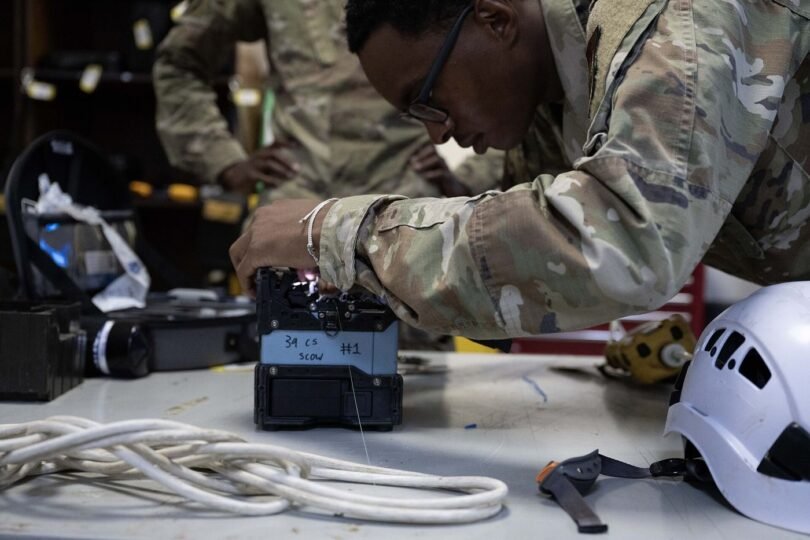
Damage does happen, most commonly from ship anchors and fishing equipment in shallow coastal waters, which is why repair vessels remain on standby in ports around the world ready to sail. Fixing a break involves locating the fault precisely, hauling both ends of the cable to the surface, splicing the fibres in a controlled environment aboard ship and lowering the repaired section back down. The work can take weeks in bad weather, during which networks rely on alternative routes that may be longer, slower and more congested than the path customers normally enjoy unnoticed. Security concerns have grown around this infrastructure, prompting governments to pay closer attention to who builds, owns and maintains the cables landing on their shores and carrying their citizens data. New systems keep increasing capacity through additional fibre pairs and cleverer signalling, squeezing more data through glass installed years ago as demand from video, cloud computing and artificial intelligence continues climbing steeply. Environmental surveys accompany every project, assessing effects on marine habitats and adjusting routes where sensitive ecosystems require protection from disturbance. Invisible beneath the waves, these cables remain the true backbone of the connected world above them. Reporting and analysis from sources such as IEEE Spectrum track the same developments, and specialists following undersea fibre cables carrying the internet say the direction is now consistent across independent lines of evidence.
The Wider Context
Adoption of undersea fibre cables carrying the internet follows a familiar pattern with an unfamiliar speed. Early users tolerate rough edges in exchange for advantage, mainstream users arrive when the tool disappears into existing workflows, and the market consolidates around whoever made that transition feel effortless. Vendors are racing less on raw performance now than on integration, support and trust.
What Happens Next
The realistic forecast for undersea fibre cables carrying the internet is steady integration rather than sudden replacement: embedded in products people already use, improving in increments, and regulated in proportion to its reach. The companies and institutions that plan on that basis, training staff and redesigning processes instead of chasing launches, are the ones the adoption data tends to vindicate. You can follow related developments in our coverage of technology.
It is also worth remembering how quickly the picture in this area has changed before. Positions that looked settled a few years ago have been revised as new data arrived, and the same humility is appropriate now. The strongest coverage of this subject, and the most useful advice, tends to come from sources that update their views openly when the facts move, rather than defending an earlier position long after it has stopped fitting the evidence available.






Leave a Comment